Version History
Every version is playable. Click through to see how the game evolved.
v9 — Polish & Feel
Refinement pass on everything v8 introduced. Tighter physics, better boost feel, improved collision responses. The version where it stops feeling like a prototype and starts feeling like a game. If you're playing for the first time, start here.
- Refined physics tuning across all movement modes
- Improved boost mechanics and feel
- Better ball collision responses
- All v8 features: split-screen, GLB models, surface-following, dodge
v8 — The Merge
The best of everything combined. v8 merges v4's camera system (5 modes including split-screen) with v7's GLB models and surface-following physics. Full 2-player local multiplayer with team colors, goal detection, scoreboard, timer, and a comprehensive settings GUI organized into Crab, Ball, Physics, Camera, Arena, and Game sections.
- Blender-modeled crab + arena (GLB format)
- Surface-following raycasting — drive up walls and ceilings
- 2-player local multiplayer with team colors
- 5 camera modes: overhead, P1 chase, P2 chase, ball follow, split screen
- 3 movement modes: Walk (wide), Scuttle (boost+forward), Strafe (boost+lateral)
- Double-jump dodge with directional flip
- Goal nets, collision physics, scoreboard + timer
- lil-gui settings panel with save/load presets
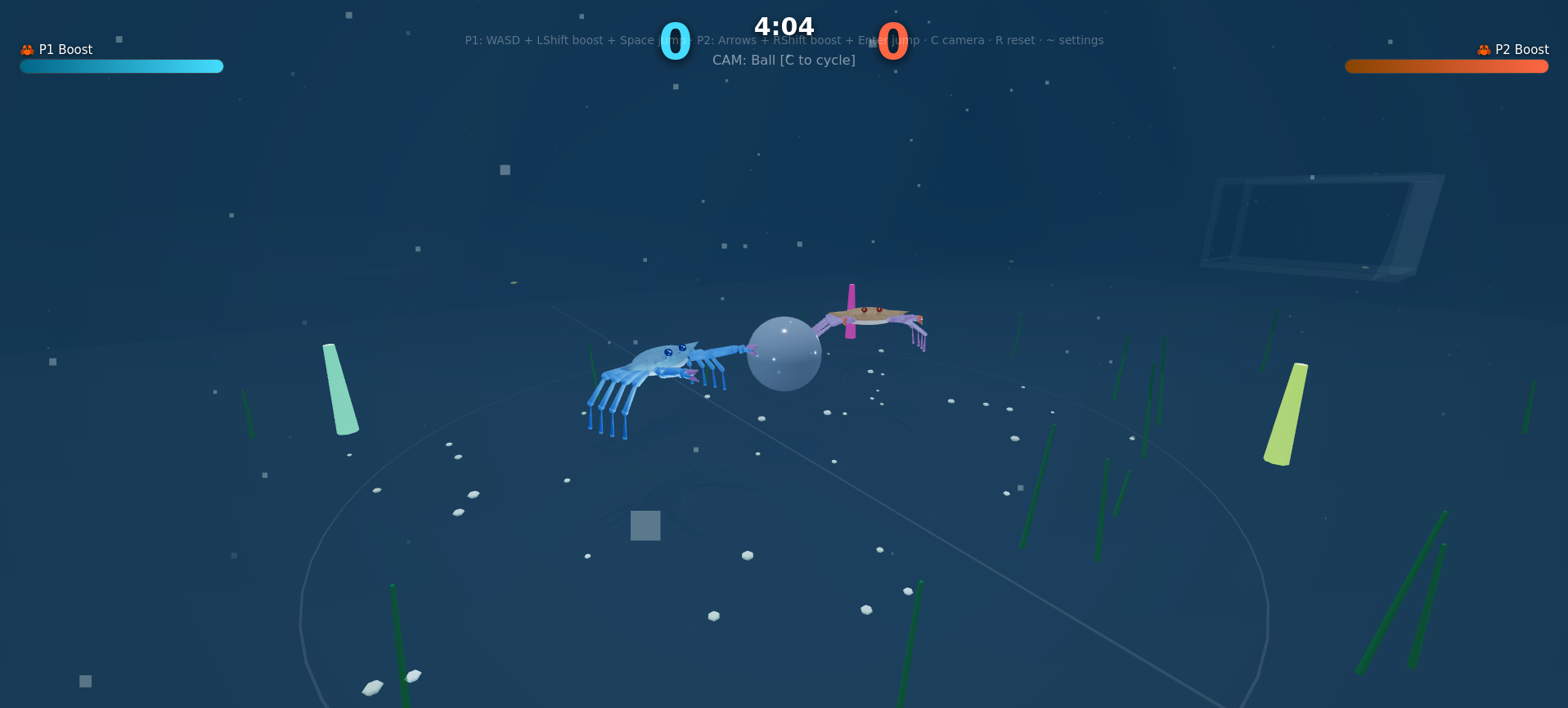 ▶ Play v8
v7 — GLB Models & Surface Physics
The Blender breakthrough. Replaced procedural geometry with proper GLB models exported from Blender. Introduced surface-following raycasting so crabs stick to any surface. The arena got beveled corners and protruding goalposts. Fixed the infamous "airborne deadlock" bug where crabs would get stuck in mid-air after a dodge.
- First version with Blender-exported GLB models
- Surface-following raycasting physics
- Arena v2 with beveled corners and ramps
- Fixed jump/dodge map-clipping with AABB safety bounds
- Team coloring: 45% lerp toward team color + 15% emissive
- Organized settings GUI: 🦀🏟️⚽🌊📷🎮
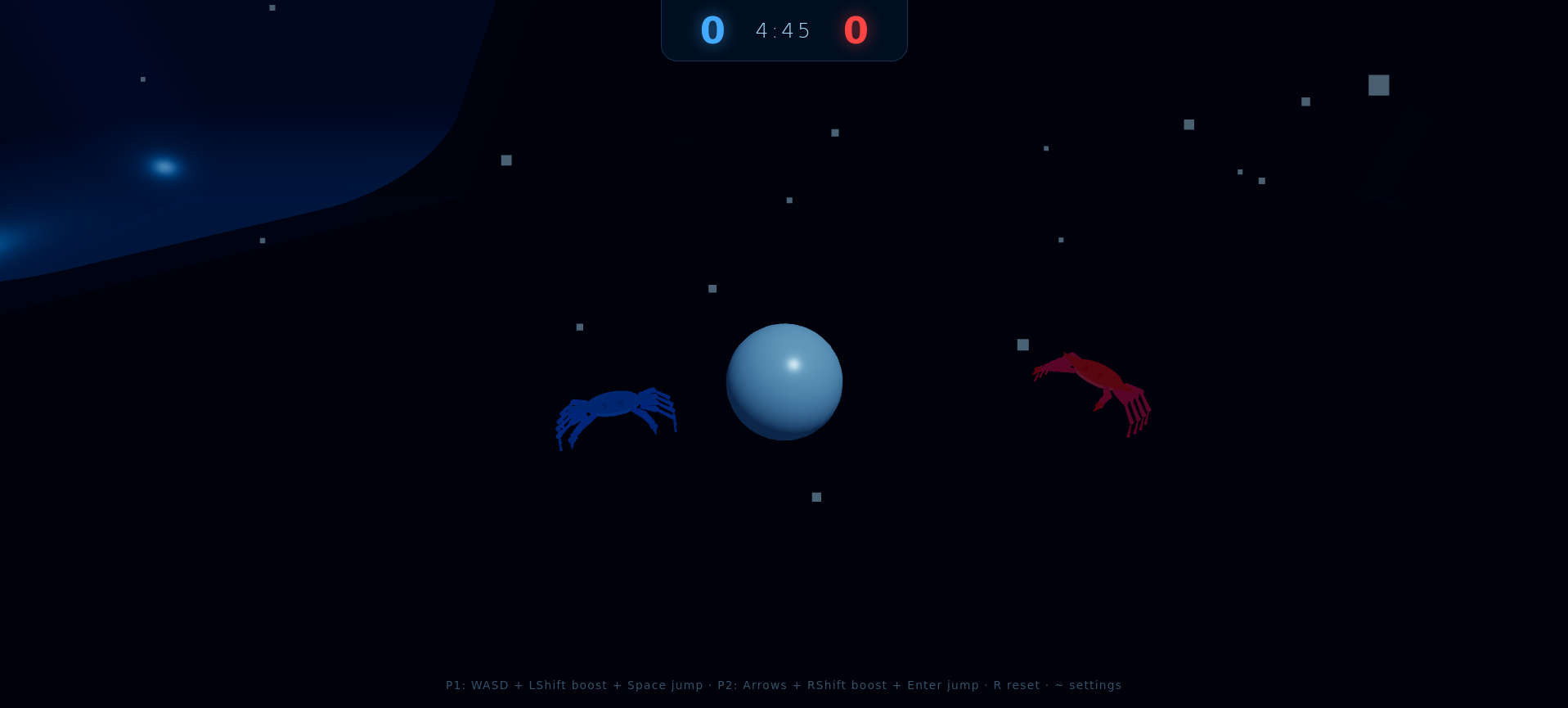 ▶ Play v7
v6 — Procedural Crab Model
Gave the crab a real body — procedurally generated in Three.js with articulated legs, claws, eye stalks, and carapace. Added underwater particle effects (bubbles, caustics). The crab actually looks like a crab now instead of a colored box.
- Procedural crab with articulated legs and claws
- Underwater particle effects
- Improved visual fidelity
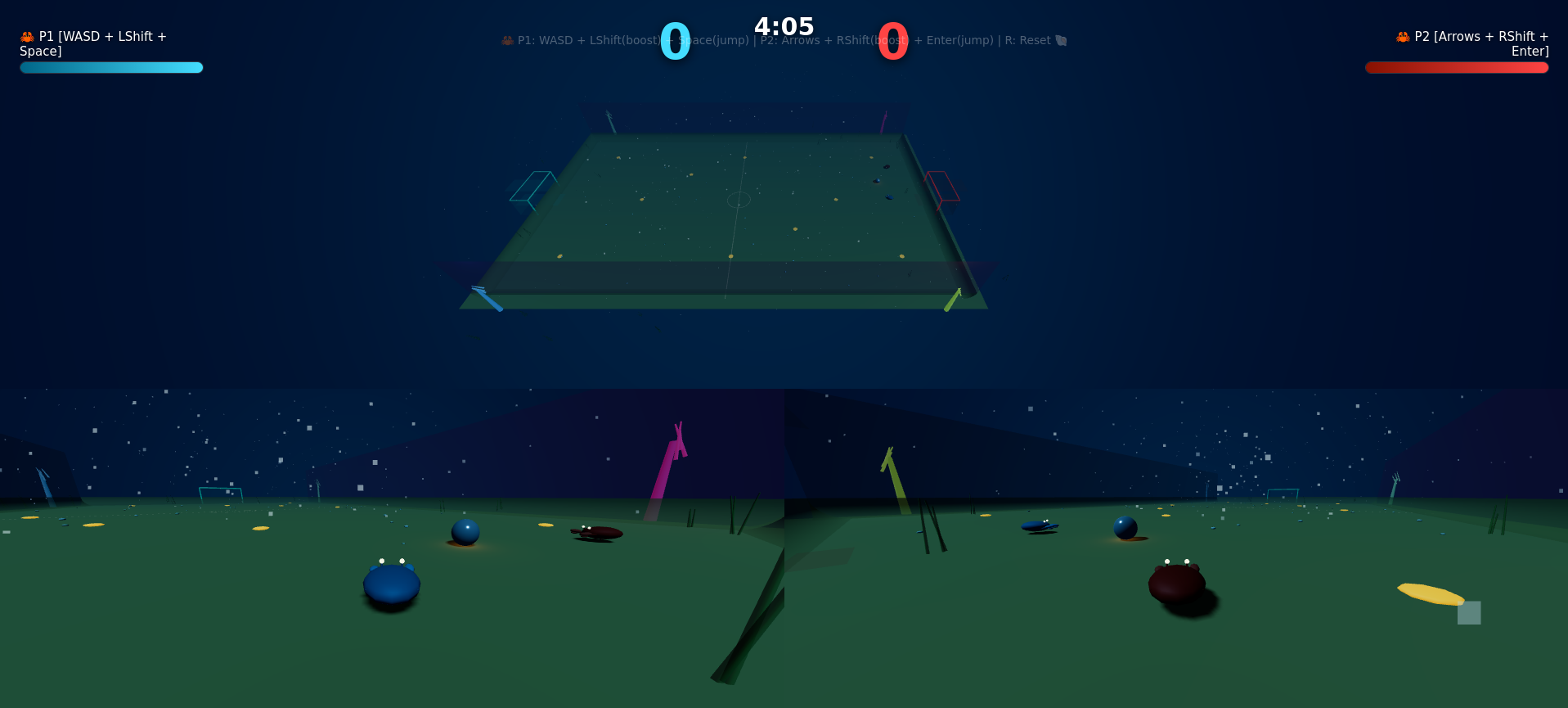 ▶ Play v6
v5 — Physics Refinement
Focused on making movement feel right. Tuned acceleration curves, ball bounce physics, and wall interactions. The ball started behaving more predictably — less "random bouncing," more "I meant to do that."
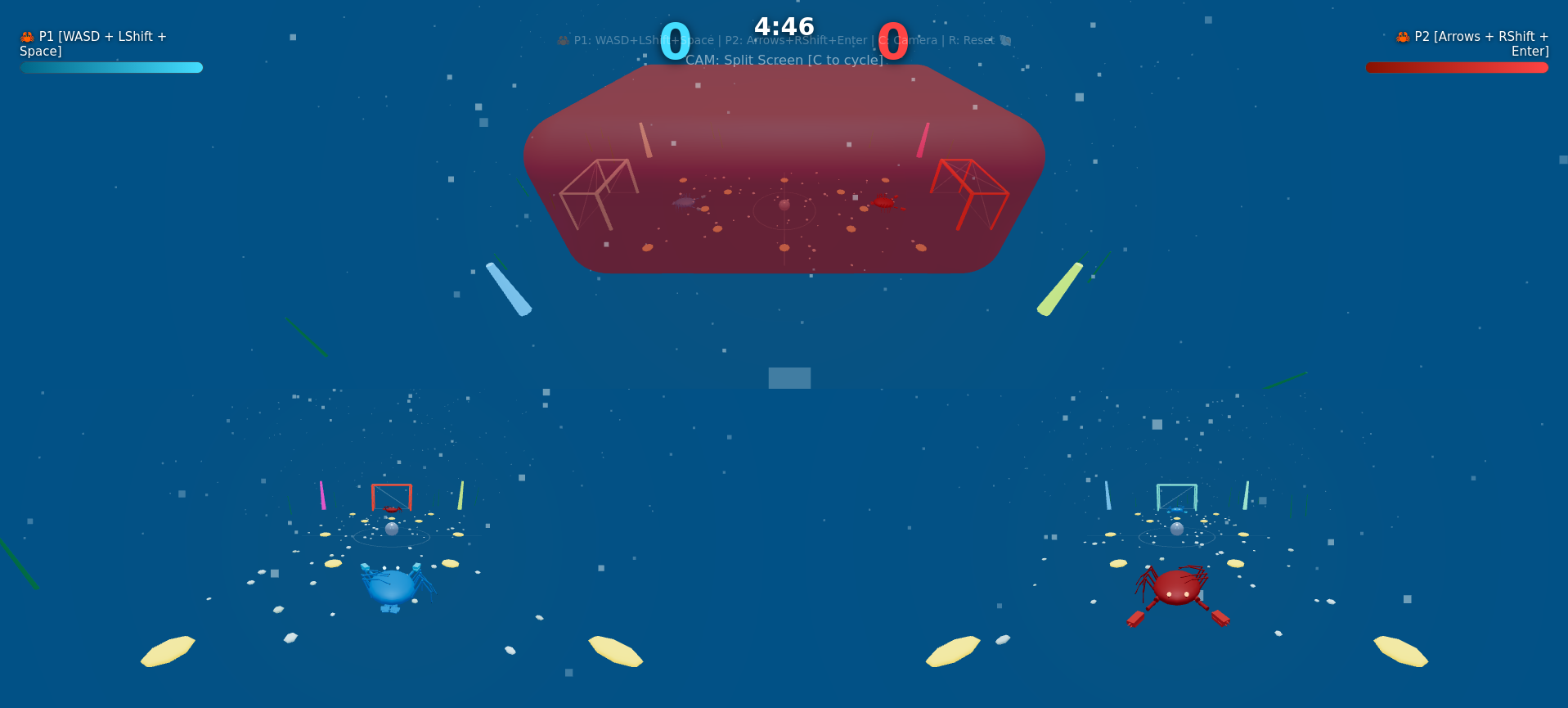 ▶ Play v5
v4 — Camera System & Full Anatomy
The camera update. Added 5 camera modes including split-screen for 2-player. Built a full anatomical crab model (procedural). Added the underwater theme that defines the game's aesthetic — deep blue arena with caustic lighting effects.
- 5 camera modes: overhead, P1 chase, P2 chase, ball, split screen
- Full anatomical crab model
- Underwater theme with caustic lighting
- 2-player local on one keyboard
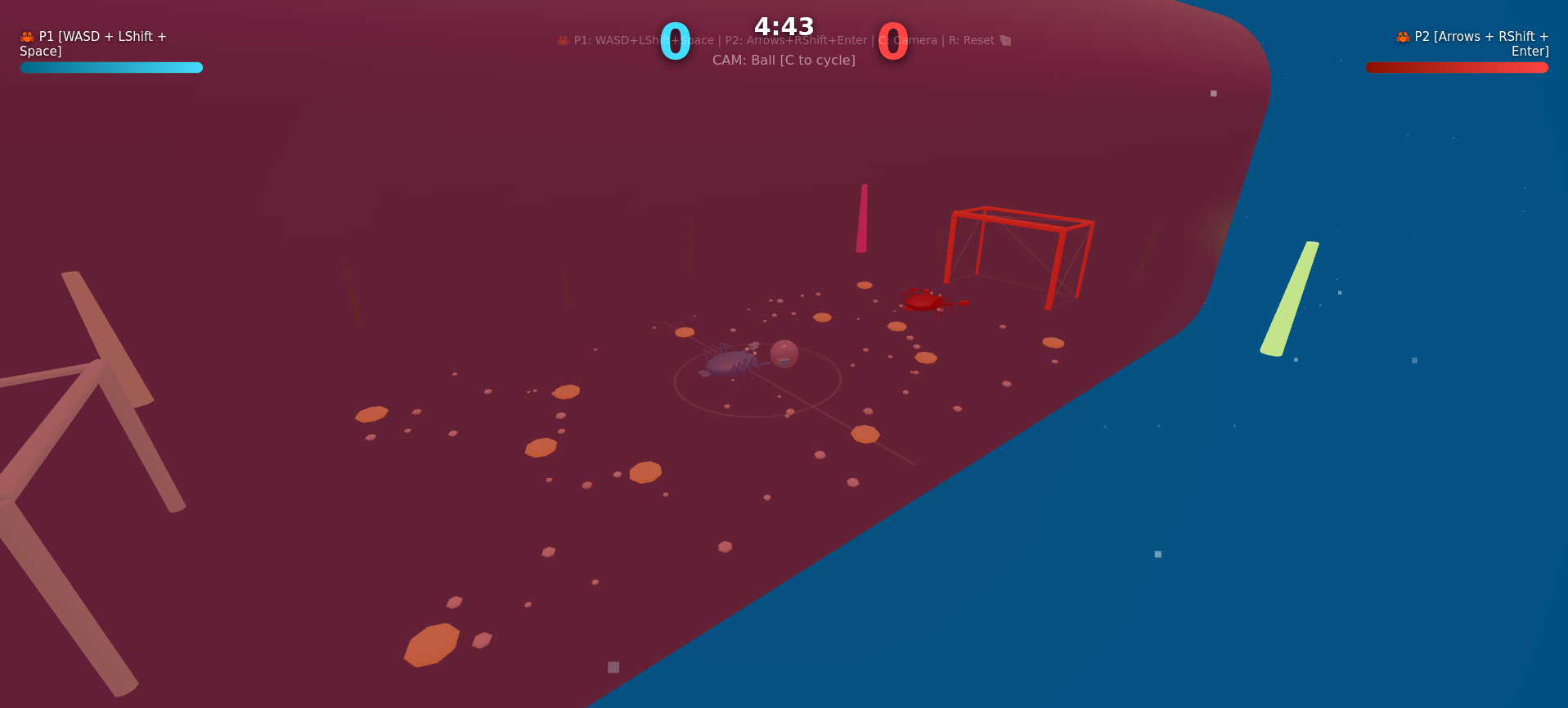 ▶ Play v4
v3 — Movement Modes & Dodge
The movement breakthrough. Three distinct modes that change how the crab drives: Walk (wide turning, classic car feel), Scuttle (boost + forward, crab rotates sideways — the signature move), and Strafe (boost + lateral movement). Added double-jump dodge with directional flip, directly inspired by Rocket League's dodge mechanic.
- 3 movement modes: Walk, Scuttle, Strafe
- Double-jump dodge with directional flip
- lil-gui settings panel with named presets
- The version that proved the concept is fun
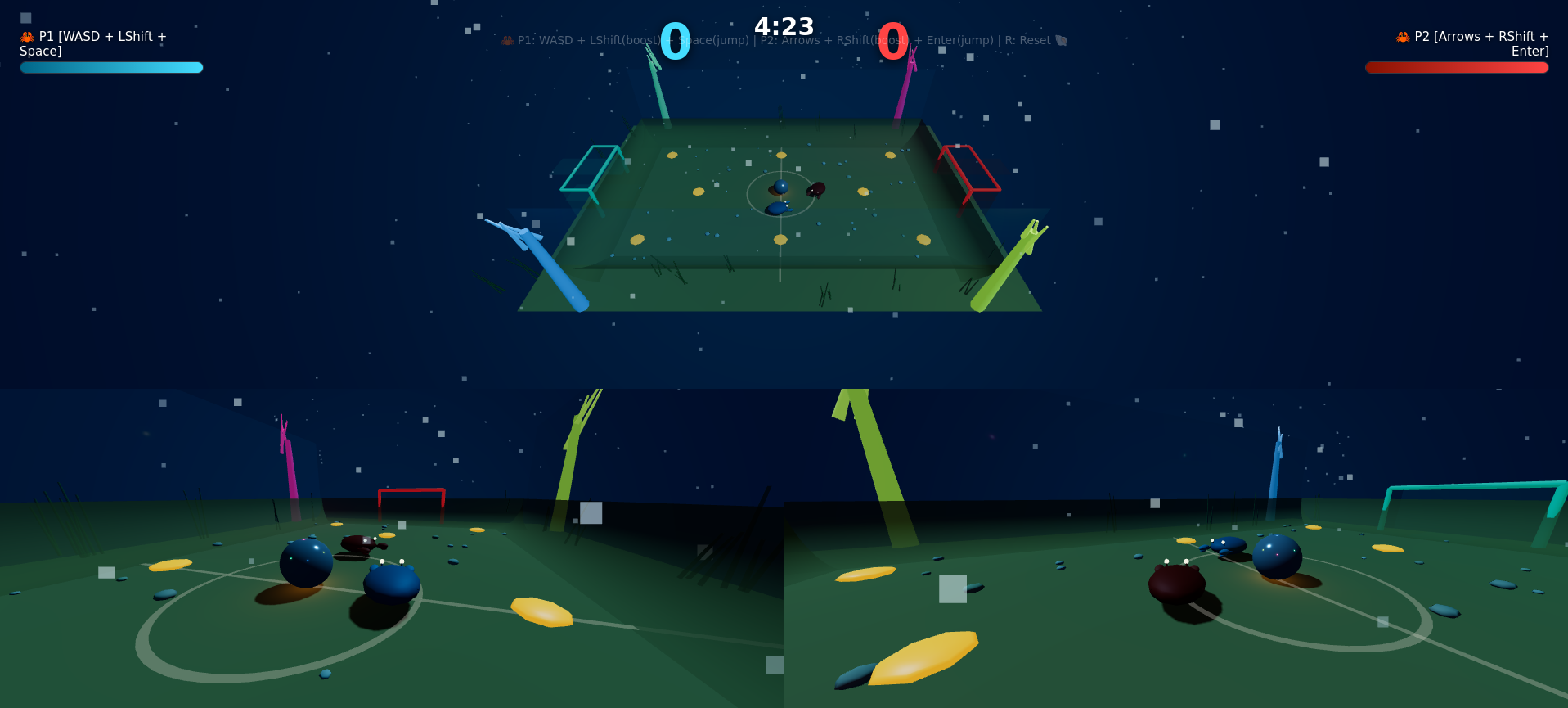 ▶ Play v3
v1 — The Original
Where it all started. A Three.js scene with a box-shaped crab, a sphere for a ball, and four walls. Basic WASD movement, basic physics. Built in a single session. Ugly as sin. Immediately addictive.
- Basic Three.js scene
- Box crab, sphere ball, walled arena
- WASD movement
- The proof that crabs + soccer = fun
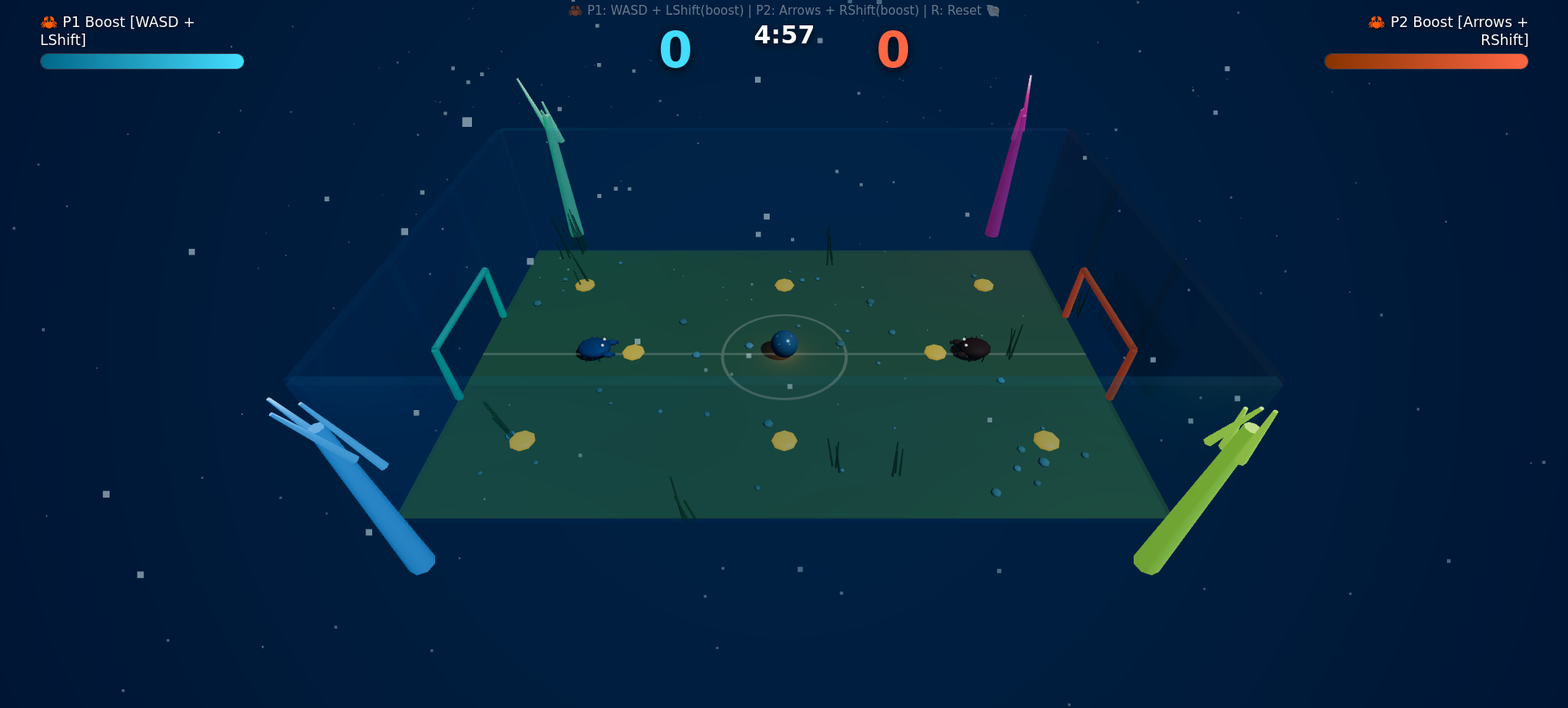 ▶ Play v1
Car Soccer — Pre-Crab Era
Before crabs, there were cars. The original prototype that proved browser-based Rocket League is possible. Quickly abandoned once someone said "what if crabs though."
▶ Play Prototype